
Gate Won't Close or Latch? Quick Fixes Before We Arrive
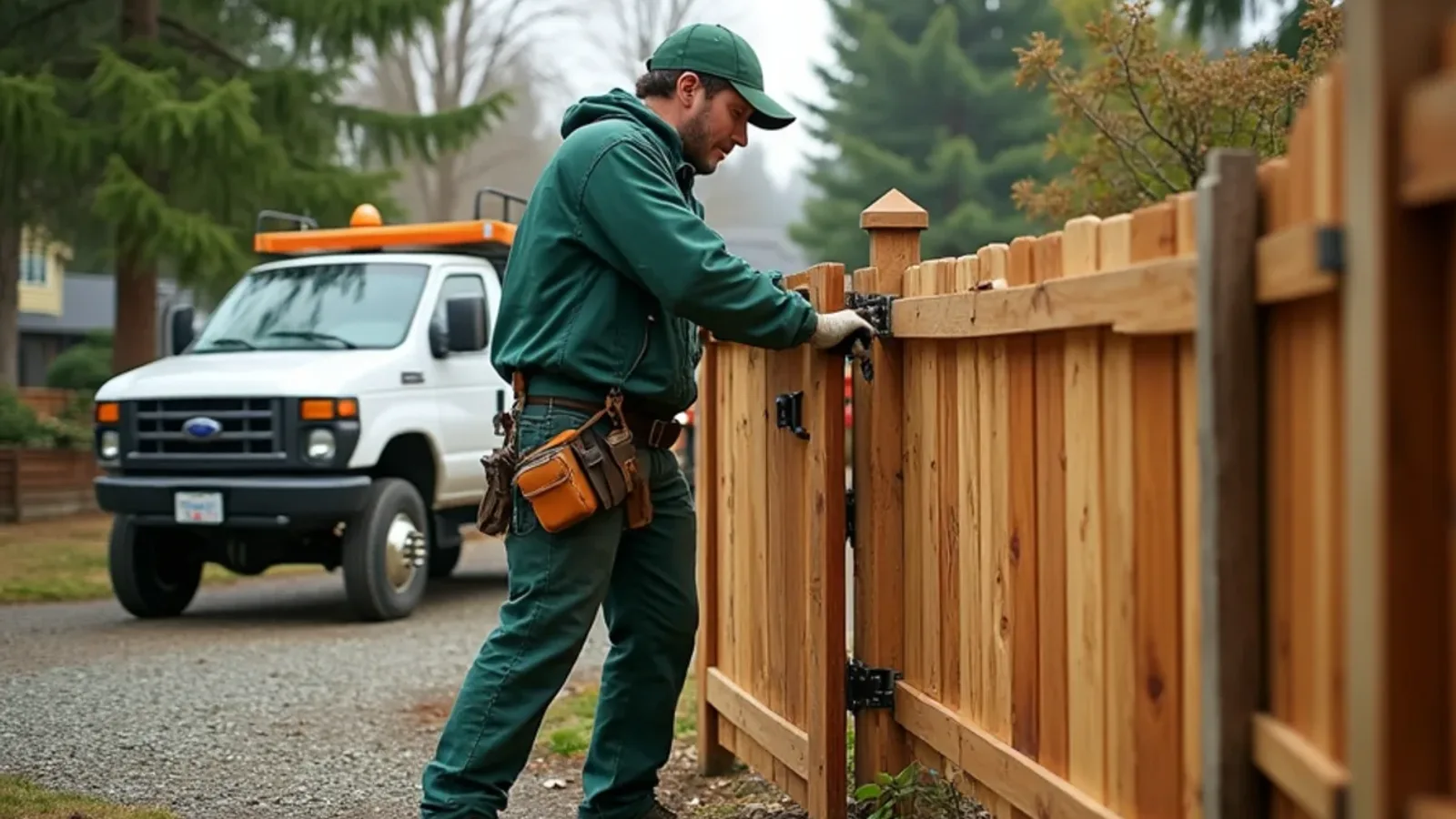
A gate that will not close or latch is usually doing one of four things: sagging at the latch corner, swelling shut after a wet spell, fighting a loose or worn hinge, or riding on a post that has heaved. Figure out which, and the right temporary fix becomes obvious.
Gates take more abuse than any other part of a fence. They swing, slam, carry kids, and catch wind, and around here they do it through a long wet season. After a stretch of November rain we get a wave of gate calls, and a good share can be nursed along by the homeowner until a crew gets there.
First, diagnose what is actually wrong
Stand back and watch the gate swing. Where it binds and where the gaps open up tells you the cause faster than any tool.
- Sag
- The latch-side corner drops and drags, and the gap at the top opens into a wedge. The frame has racked out of square.
- Swollen wood
- The gate closed fine in summer but binds along the whole latch edge after rain. The boards have taken on water and grown.
- Hinge wear
- The gate is loose and sloppy, screws back out, or the hinge barrel is worn. The gate shifts position when you lift it.
- Post heave or rot
- The hinge post itself leans or wobbles. Our wet, gravelly ground can lift a shallow footing or soften a rotted post base.
Fixing a sagging wood gate
Sag is the most common and the most fixable. The frame has lost its square, so the top corner by the hinge drops toward the latch corner. An anti-sag kit, a steel cable run corner to corner with a turnbuckle, pulls the frame back into shape. The cable runs from the top hinge corner down to the bottom latch corner, and you tighten the turnbuckle until the gate lifts level again.
- Check the hinge screws first and snug any that have backed out.
- Install the cable from the top hinge corner to the bottom latch corner.
- Tighten the turnbuckle a few turns at a time until the gate sits square.
- Stop as soon as the latch lines up, since overtightening bows the frame the other way.
When the wood has swollen shut
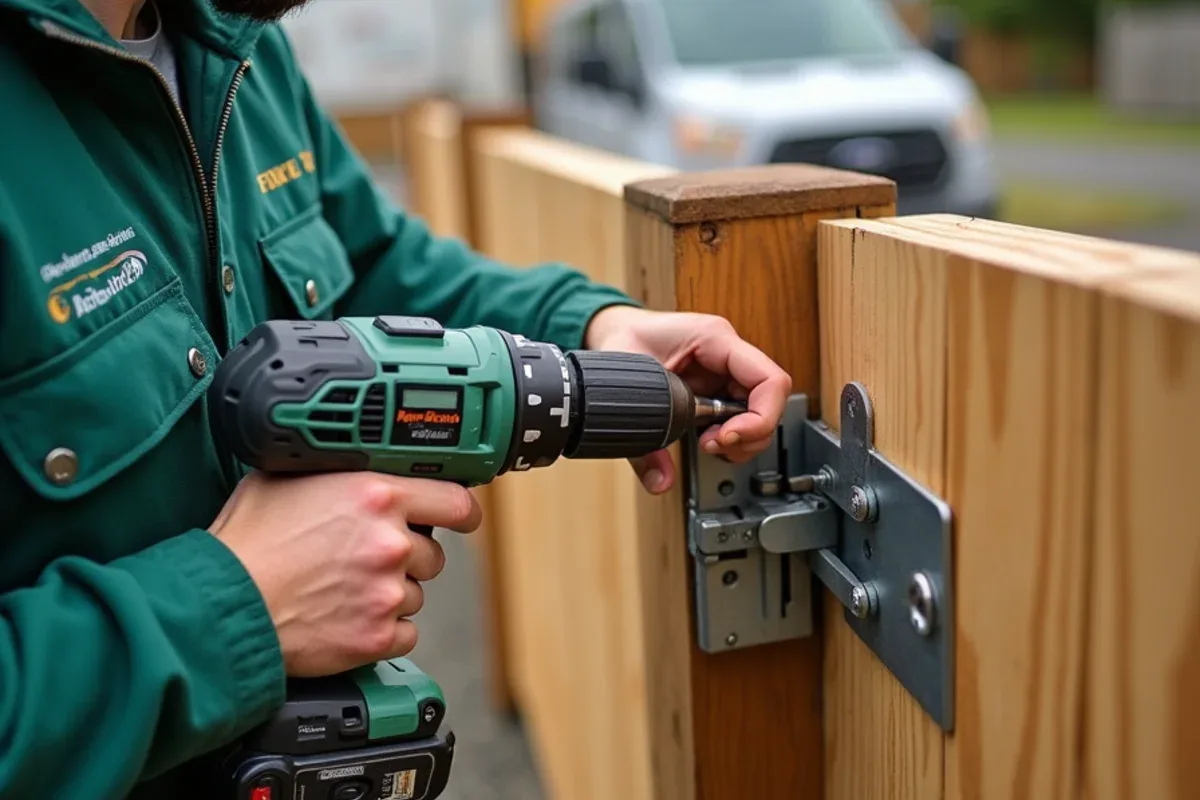
If the gate binds only after rain and frees up when things dry, the wood is the problem, not the hardware. For a temporary fix, you can plane or sand the high spot on the latch edge, but go easy, because wood that swelled will shrink again and leave you with a sloppy gap in July. Often the better move is to move the latch catch slightly rather than remove wood. A contractor can set the gap properly so it works wet or dry.
Hinge and latch realignment
Loose hinges are often just a matter of longer screws biting into fresh wood, or stripped holes that need to be plugged and redrilled. If the latch no longer catches, the fix may be as simple as loosening the catch, letting the gate find its closed position, and refastening it there. Chain link gates have adjustable hinges that let you raise, lower, and swing the leaf, so a few turns of a wrench often cures a chain link gate that will not meet the latch post.
Automatic gate basics
If you have a powered gate that stopped working, start with the simple checks before assuming the worst. Many automatic gates refuse to close when a safety sensor is blocked or misaligned, and that is usually something you can spot and clear yourself.
- Confirm the opener has power and the battery backup is not dead.
- Look for a blocked, dirty, or knocked-askew photo-eye safety sensor in the gate's path.
- Clear leaves, gravel, or a rock jammed in the track of a sliding gate.
- Check for an obvious obstruction the gate's auto-reverse is reacting to.
When it is really a post problem
If the hinge post itself leans or wiggles, no amount of cable or hinge adjustment will hold. The post is carrying the whole weight of the gate, and in our soil a heaved or rotted post has to be reset or replaced. That is a job for a crew with the tools to dig out the old footing and set a new post plumb and deep.
A two-minute gate diagnosis checklist
Before you buy a single part, run through this quickly — it tells you which of the fixes above you actually need.
- Lift the latch side of the gate: if it rises easily, the frame has sagged and wants an anti-sag cable.
- Grab the hinge post and push: any wiggle at the base means the post, not the gate, is the problem.
- Open and close slowly: if it binds only in one spot, the wood has swollen or a hinge has shifted.
- Check the hinge screws: loose or stripped screws are the single most common cause and the easiest fix.
- Look at the bottom corner: dragging there usually points to a dropped frame or a leaning post, not the latch.
Keep a gate working through the wet season
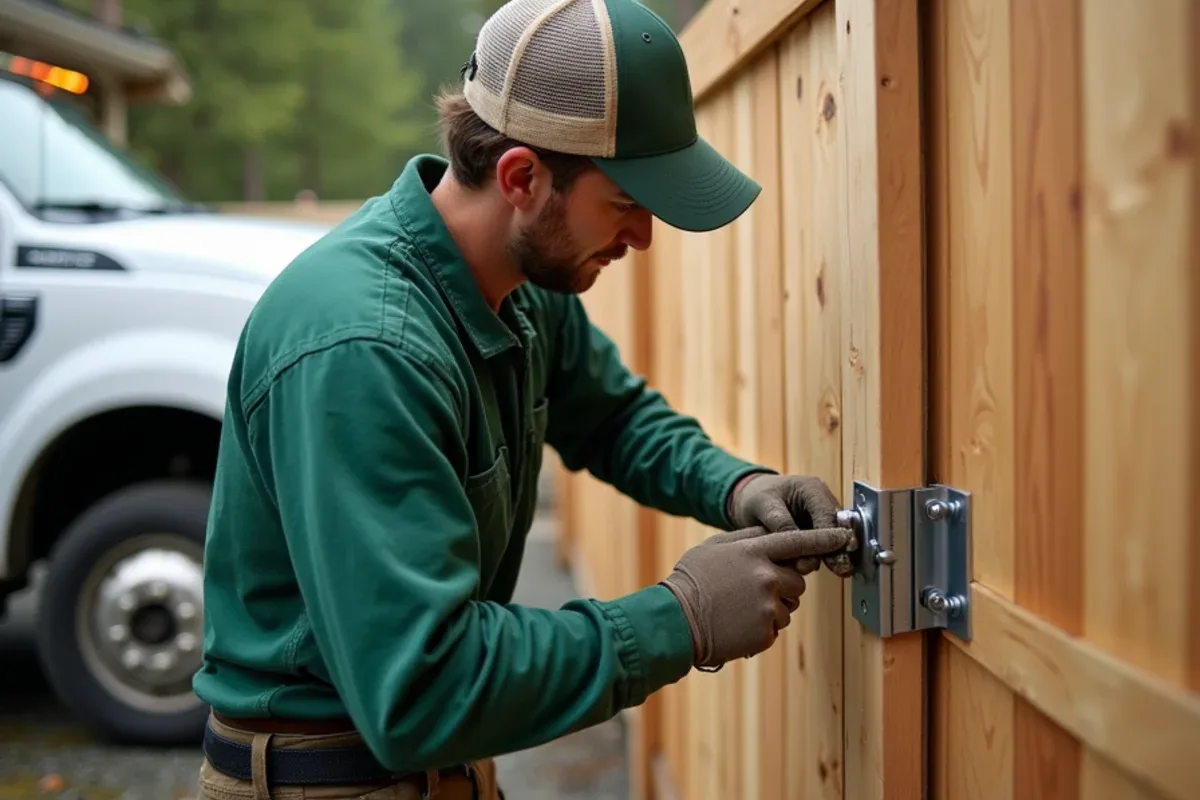
Most spring gate calls are preventable. Before the wet months, snug the hinge screws, clear leaves and grit out of the latch, and check that the hinge post is still plumb. A coat of sealer on a wood gate slows the swelling that jams it shut in January, and a drop of oil on the latch keeps it from seizing. Catching a gate that is just starting to drag — rather than one already on the ground — is the difference between a five-minute adjustment and a new post set in concrete.
Quick fixes for metal and chain link gates
Metal and chain link gates sag and stick for different reasons than wood. On a chain link gate, the usual culprits are worn hinges, a loose tension bar, or a bottom that has dropped onto the ground; backing off the hinge pins, re-tensioning the fabric, and clearing debris from the swing path fix most of it. On an ornamental steel gate, check the hinge welds and the post plumb, since a heavy metal gate pulls hard on its post. If a metal gate has dropped onto its latch, do not force it — the frame may be fine while the post has simply leaned, and forcing it bends hardware that was working.
When to call a fence contractor
Try the quick fixes, but call if the gate still drags, if the hinge post moves, or if a powered gate fault is beyond a sensor or power check. Creative Effects Contracting has serviced gates across Spanaway and Parkland since 2017, and we will give you a free written estimate for the repair. Reach us at (614) 543-4232 and we will get your gate swinging and latching again.
Get a Free On-Site Fence Estimate
Talk to a local Lakewood fence pro. We'll look at your line, your soil and your gates—then quote it in writing.
- Insured & Bonded
- WA L&I #CREATEL809CL
- 4.6★ on Google (51 reviews)
- Free Estimates
- Serving Lakewood since 2017
Frequently asked
- Two reasons: the wood swells as it soaks up our winter rain, and the hinge post can lean in softened, saturated ground. A gate that binds only in the wet months is usually one of those, and sealing the wood plus checking the post plumb heads it off.