
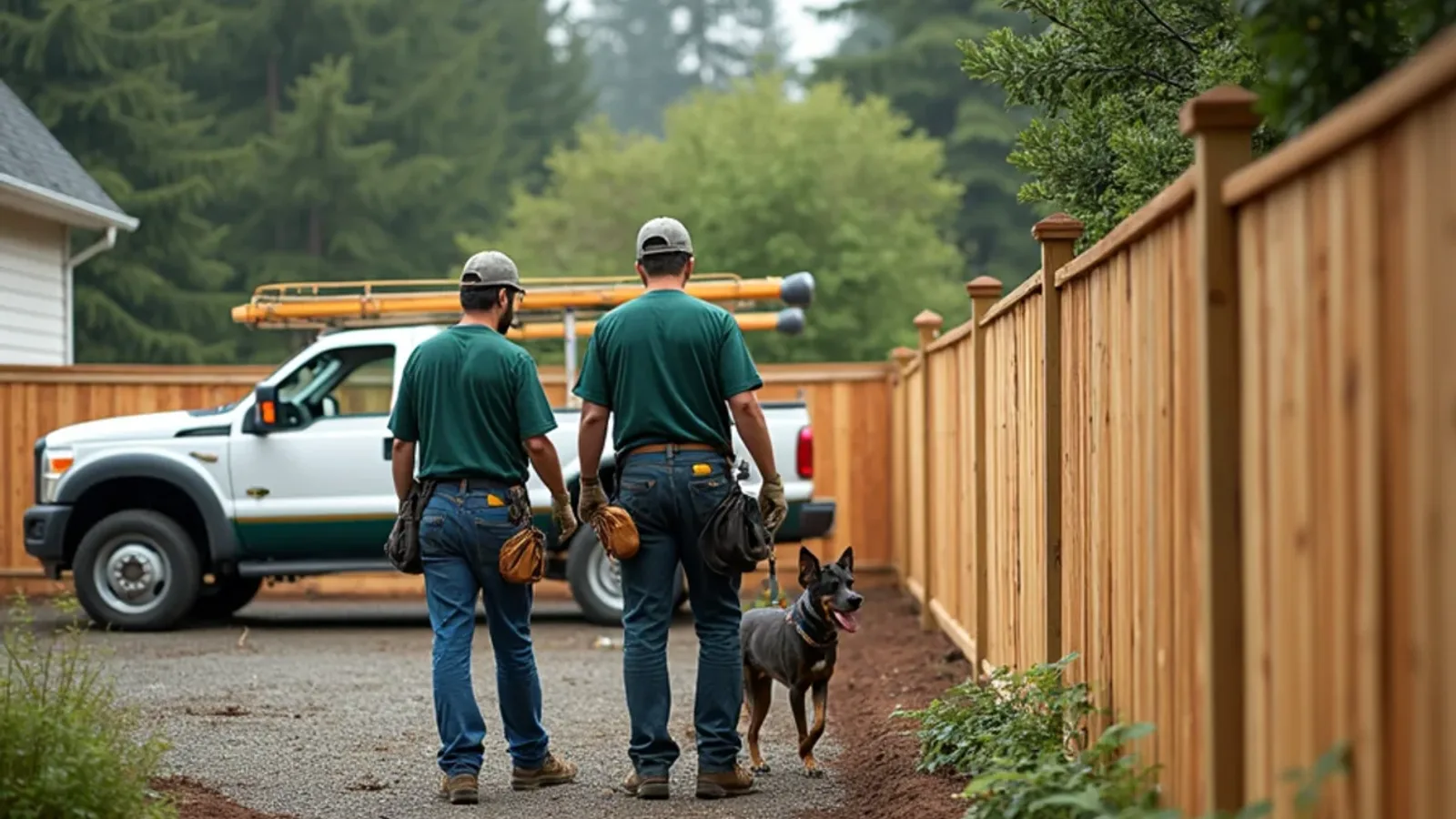
A dog fence is only as good as its weakest point, and dogs find it. A digger goes under, a jumper goes over, and a slim dog slips through a gap nobody else would notice. We build dog fencing around how your specific dog escapes, so the yard actually holds them.
Several of our own Lakewood-area jobs started with a dog getting loose, so we take the details seriously: height for jumpers, a secured bottom or dig guard for diggers, tight spacing for squeezers, and gate latches a nose cannot nudge open.
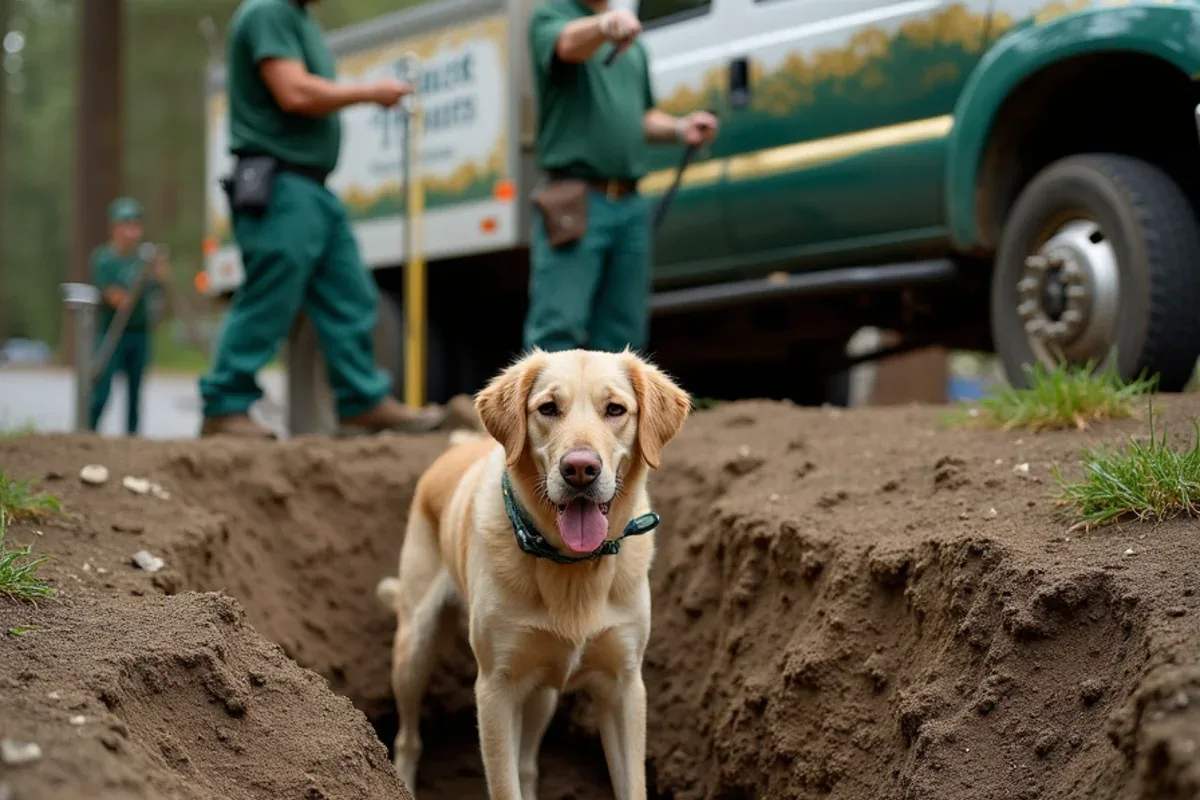
Match the Fence to the Dog
- Jumpers and climbers: enough height, and a design with no toe-holds.
- Diggers: a buried bottom, dig guard or concrete mow strip at the base.
- Small or slim dogs: tight picket or mesh spacing with no squeeze-through gaps.
- Secure, self-latching gates that a dog cannot push or paw open.
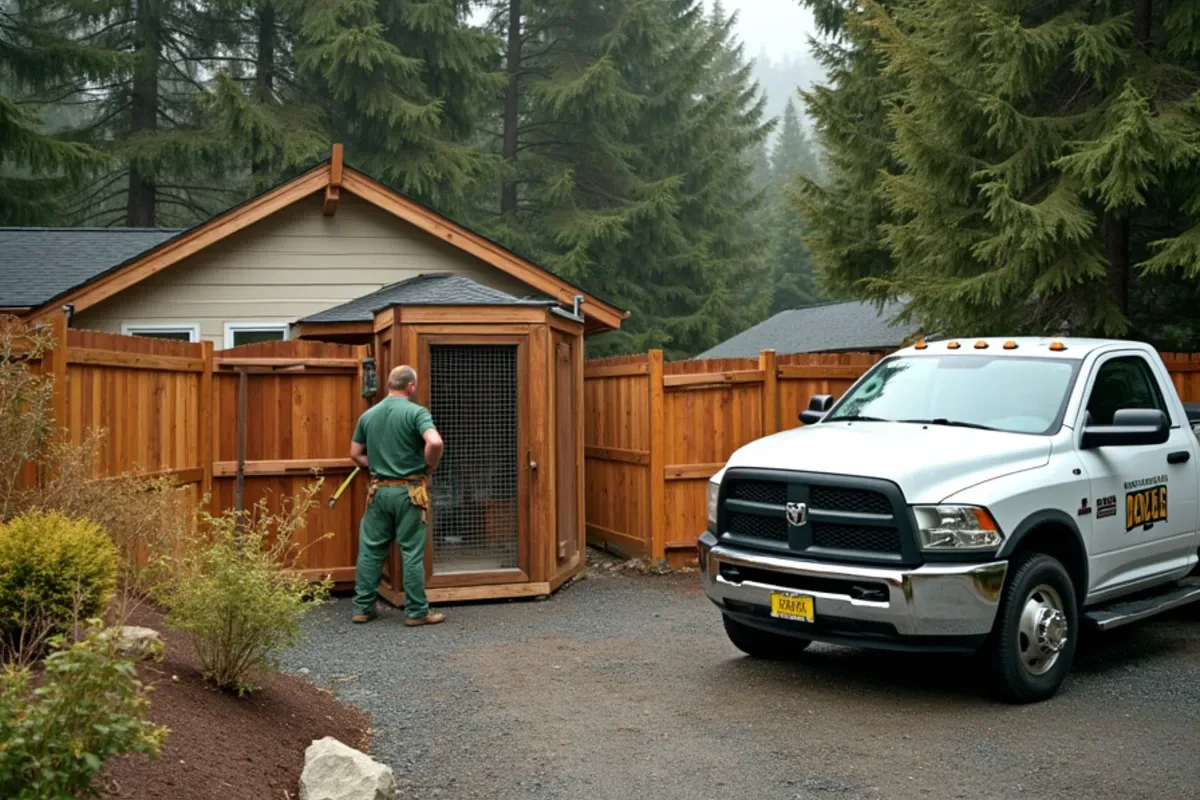
Runs, Kennels and Materials
We also build enclosed dog runs and kennels for yards where a full-perimeter fence is not the goal. Chain link gives visibility and a chew-resistant barrier, cedar and vinyl give privacy, and aluminum gives a clean look — we match the material to your dog and your yard.
Height by How Your Dog Escapes
There is no single "dog fence height" — it depends entirely on the dog. A short dog that only needs a boundary is a very different build from a tall, athletic jumper. For climbers, we avoid horizontal rails and toe-holds on the inside face so there is nothing to scale. For high jumpers, we go taller and can add an inward-angled top. We size it to your dog’s real ability, not a catalog number.
Stopping Diggers for Good
Diggers are the most persistent escape artists, and the fix is at the bottom of the fence. Depending on the yard we bury an L-footer of mesh that turns outward underground, run a concrete mow strip along the base, or set the fabric into a trench so there is simply nothing to tunnel under. On our gravelly soil we target the dig guard to the spots your dog actually works, which is faster and cheaper than armoring the whole line.
Runs, Kennels and Materials
Not every dog needs the whole yard fenced. An enclosed run or kennel gives a secure space near the house, and we build those in chain link with a solid gate and a covered or open top as needed. For a full perimeter, chain link gives visibility and a chew-resistant barrier, cedar and vinyl give privacy that also keeps a reactive dog calmer, and aluminum gives a clean look for the right breeds. We match the material to the dog, the budget and the yard.
Gates and Latches Dogs Can’t Beat
The gate is where most backyard escapes actually happen — a latch left unlatched, or one a clever dog learns to nose open. We fit self-latching hardware mounted out of a dog’s reach, latches that re-engage on their own when the gate swings shut, and a tight bottom gap so nothing crawls under the gate itself. For the determined escape artist, a lockable latch takes the decision out of the dog’s paws.
A Note on Invisible Fences
We build physical fences, not buried electronic systems. An invisible fence can stop a well-trained dog from leaving, but it does nothing to keep other animals, or people, out of the yard, and a determined dog will sometimes run through the correction. For reliable containment — and for anything with a strong prey drive — a real barrier is what actually works, and it protects your dog from what is on the other side too.
How We Build a Dog Fence
A dog fence is really a custom fence, because every dog escapes differently. The build starts with watching the dog, not picking a catalog height.
- Walk the yard with you and note where the dog paces, digs or tries to get out.
- Pick the height and material for the breed — taller and toe-hold-free for climbers, solid or tight-mesh for others.
- Call 811, then set posts and run the fence with no gaps a dog can widen.
- Secure the bottom for diggers — a buried edge, dig guard or concrete mow strip at the problem spots.
- Hang a self-latching gate mounted out of a dog’s reach, with a tight bottom gap.
- Walk the finished yard and check every corner the dog was working.
Fencing for Cats and Small Pets
Dogs are not the only escape artists. Cats climb, rabbits squeeze, and small dogs find gaps that would never occur to a Lab. For climbers we can add an inward-angled top or a cat-specific topper that turns them back; for squeezers we tighten the mesh or picket spacing and seal the bottom. The principle is the same as with dogs — watch how the animal actually gets out, then close that specific route rather than hoping a standard fence holds them.
Fencing for a New Puppy or a Rescue
A new dog is the most common reason people call us in a hurry — a puppy that cannot be trusted off-leash yet, or a rescue whose habits you are still learning. In those cases we lean toward a secure, solid build with a dig-proof bottom and a latch the dog cannot nose open, because it is easier to give a settled dog more freedom later than to chase an escape artist now. We can usually move fast on these, which matters when the dog is already home.
Why Dog Owners Call Creative Effects
Several of our own Lakewood reviews started with a dog getting loose, so we take the details seriously — the gap under the gate, the toe-hold on a rail, the latch a clever dog learned to open. We have built dog fencing across the area since 2017 as a registered Washington contractor (L&I #CREATEL809CL), insured and bonded, rated 4.6★ on Google. Tell us how your dog escapes and we will build the fence that actually holds them.
Get a Free On-Site Fence Estimate
Talk to a local Lakewood fence pro. We'll look at your line, your soil and your gates—then quote it in writing.
- Insured & Bonded
- WA L&I #CREATEL809CL
- 4.6★ on Google (51 reviews)
- Free Estimates
- Serving Lakewood since 2017
Dog Fence FAQs
- Tall enough that the dog cannot clear it or get a paw-hold to climb, which varies by breed and athleticism. We pick the height for your dog and use a design with no toe-holds so a jumper cannot climb it.