
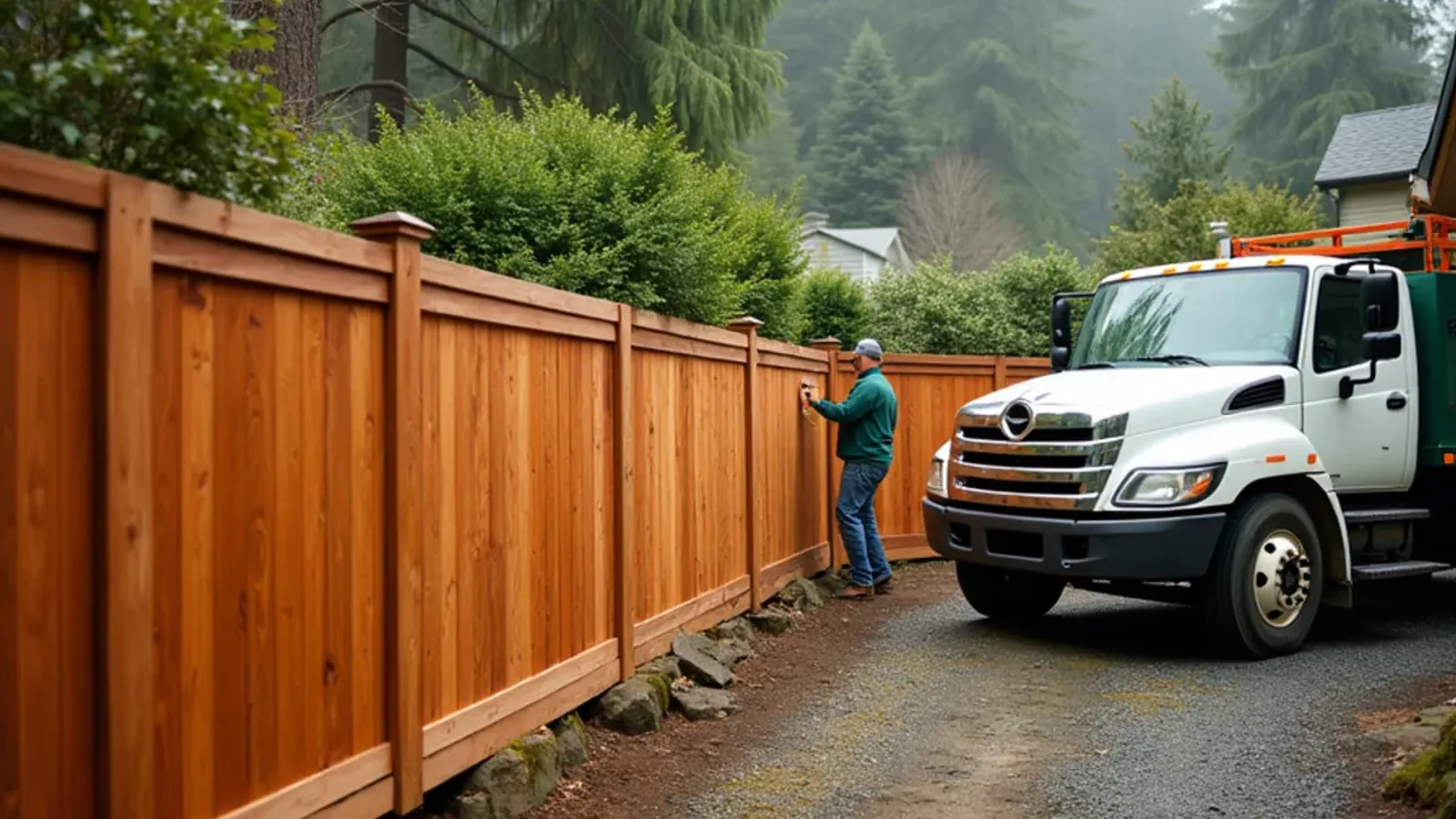
Cedar is the fence most Lakewood homeowners picture — warm color, tight grain, a natural resistance to rot and bugs, and a surface that takes stain well. We build cedar privacy, shadow box, picket and cap-and-trim fences, and we plan the parts you do not see as carefully as the boards you do.
In our wet climate, the fastest way to shorten a cedar fence’s life is a post that rots at the ground line. That is why we often set cedar boards on galvanized steel or treated posts and add drainage where water collects. On a lakefront yard near American Lake or Gravelly Lake, roots and standing water get reviewed before the post line is finalized.
Cedar Grades and Styles
Board grade, knot content and thickness all change how a cedar fence looks and lasts. We walk you through the options and recommend a grade that fits the budget and the exposure — a street-facing fence and a side-yard run do not have to be the same.
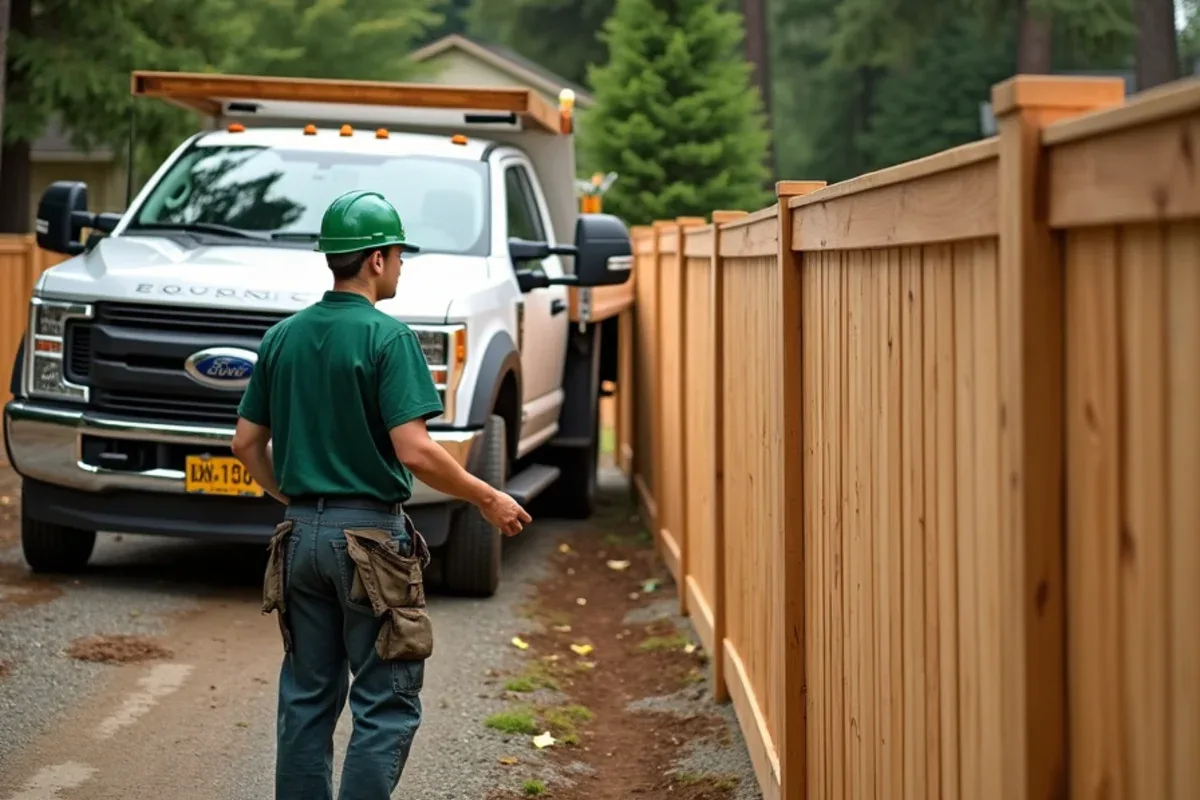
- Board-on-board and shadow box cedar for full privacy with wind relief.
- Cap-and-trim tops that hide board ends and give a finished, built-in look.
- Cedar picket for front yards, sized to setback height limits.
- Matching cedar gates, reinforced so they stay square through wet winters.
Getting the Most Life Out of Cedar
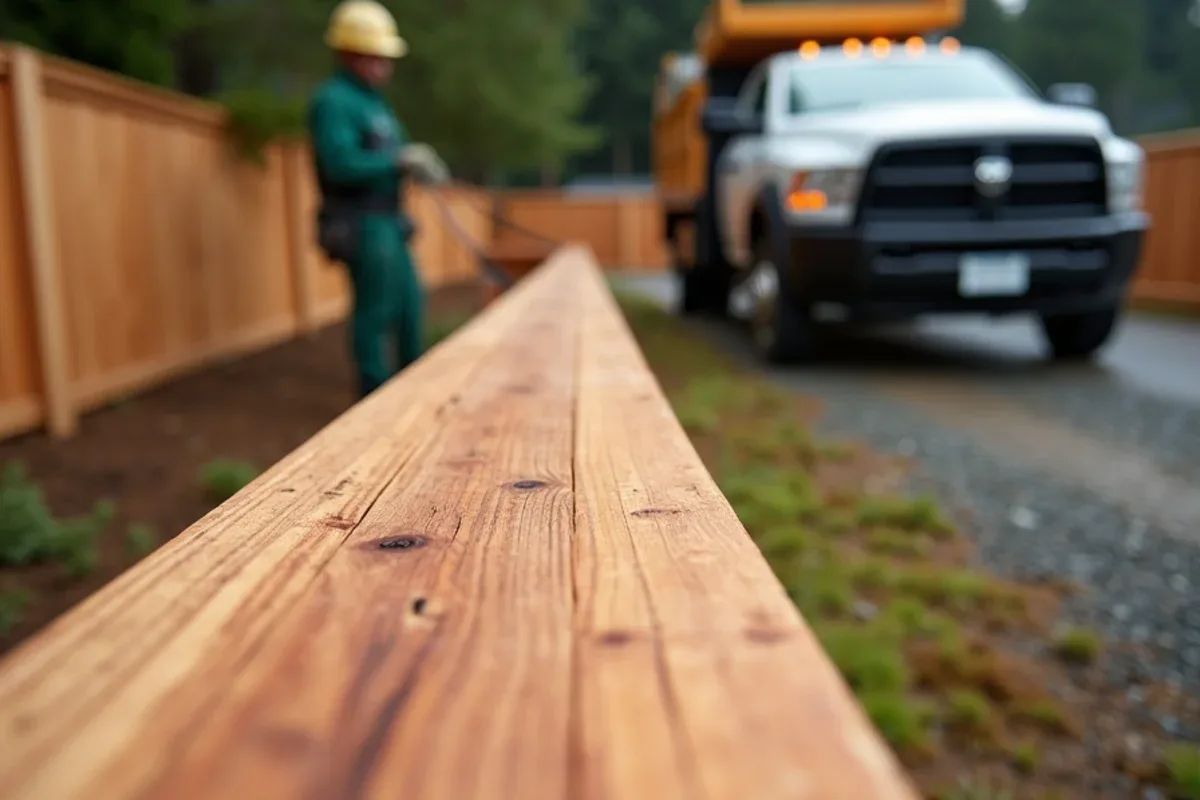
Cedar lasts longest when it can dry between rains and is sealed or stained on a sensible schedule. We set posts for drainage, keep boards off the dirt, and tell you when the new fence is ready for its first coat. A semi-transparent stain renewed on schedule keeps the color and slows weathering.
Should You Let Cedar Go Gray or Keep It Golden?
Left alone, cedar weathers to a soft silver-gray — a look plenty of Lakewood homeowners like, and structurally the fence is fine either way. If you want to hold the warm golden tone, a semi-transparent stain renewed on schedule does it, and it also slows the surface weathering on the sun-facing side. The one thing we steer people away from is a solid paint-like coat on a privacy fence, which traps moisture and peels. Whichever look you want, we set the fence up so the finish decision is yours, not forced by how it was built.
How We Build a Cedar Fence
With cedar, the difference between a fence that lasts five years and one that lasts fifteen is almost entirely in the parts you do not see.
- Confirm the line and grade, then call Washington 811 before any post hole.
- Set steel or treated posts with drainage at the base so the buried wood is not the part that rots.
- Run the rails level or stepped to the slope, keeping the bottom board up off the wet dirt.
- Fasten the cedar boards in your pattern — board-on-board or shadow box — so no gap opens as they dry.
- Add the cap and trim, then build and reinforce the cedar gate to match.
- Leave the fence to dry and tell you when it is ready for its first coat of stain.
What a Cedar Fence Costs per Foot
Cedar sits in the middle of the fence price range. As general Western Washington market context (not our prices), cedar runs roughly $25–$50 per linear foot, with a 6-foot privacy build often landing around $35–$50 before gates, tear-out, slope and drainage. Board grade is the biggest lever — a tight-grained, fewer-knot street-facing fence costs more than a value-grade side yard — followed by the post choice and the number of gates. We price each piece in writing so you can compare bids line by line.
Why Creative Effects for Cedar
Cedar is the fence we build most, and the one we see built wrong most — beautiful boards on bare wood posts that rot out at the ground in a few wet winters. We have been pairing cedar with steel or treated posts and real drainage across Lakewood since 2017. Creative Effects is a registered Washington contractor (L&I #CREATEL809CL), insured and bonded, rated 4.6★ on Google. We will walk your line, recommend a grade that fits the budget, and build it to last.
Get a Free On-Site Fence Estimate
Talk to a local Lakewood fence pro. We'll look at your line, your soil and your gates—then quote it in writing.
- Insured & Bonded
- WA L&I #CREATEL809CL
- 4.6★ on Google (51 reviews)
- Free Estimates
- Serving Lakewood since 2017
Cedar Fence FAQs
- Exact lifespan depends on the boards, the posts, drainage, sun and upkeep, so we put the expected service life and maintenance in writing rather than quoting a single number. Cedar boards on steel or treated posts, kept sealed, last the longest here because the ground-line post is not the weak point.